

Making single-panel diary comics
And noticing the little things.

Hello, dear Reader,
My friend K. Woodman-Maynard is doing a great series on her Substack, Creating Comics, about her practice of making diary comics (I’ll link to it at the end), and it got me thinking about my own occasional practice and how I’d like to do it more intentionally this summer. Unlike K.’s structured, elegant, and consistent comics in their four-panel format, mine are unstructured and inconsistent—and usually just one “panel.”
But I love creating these little documents of my days, and in my making and teaching, I’ve taken a lot of inspiration from Lynda Barry’s “Daily Diary” assignment. Barry invites us to make a four-panel grid to list what we did, saw, overheard, or questioned that day. Here’s the first part of the assignment from Barry’s Making Comics:
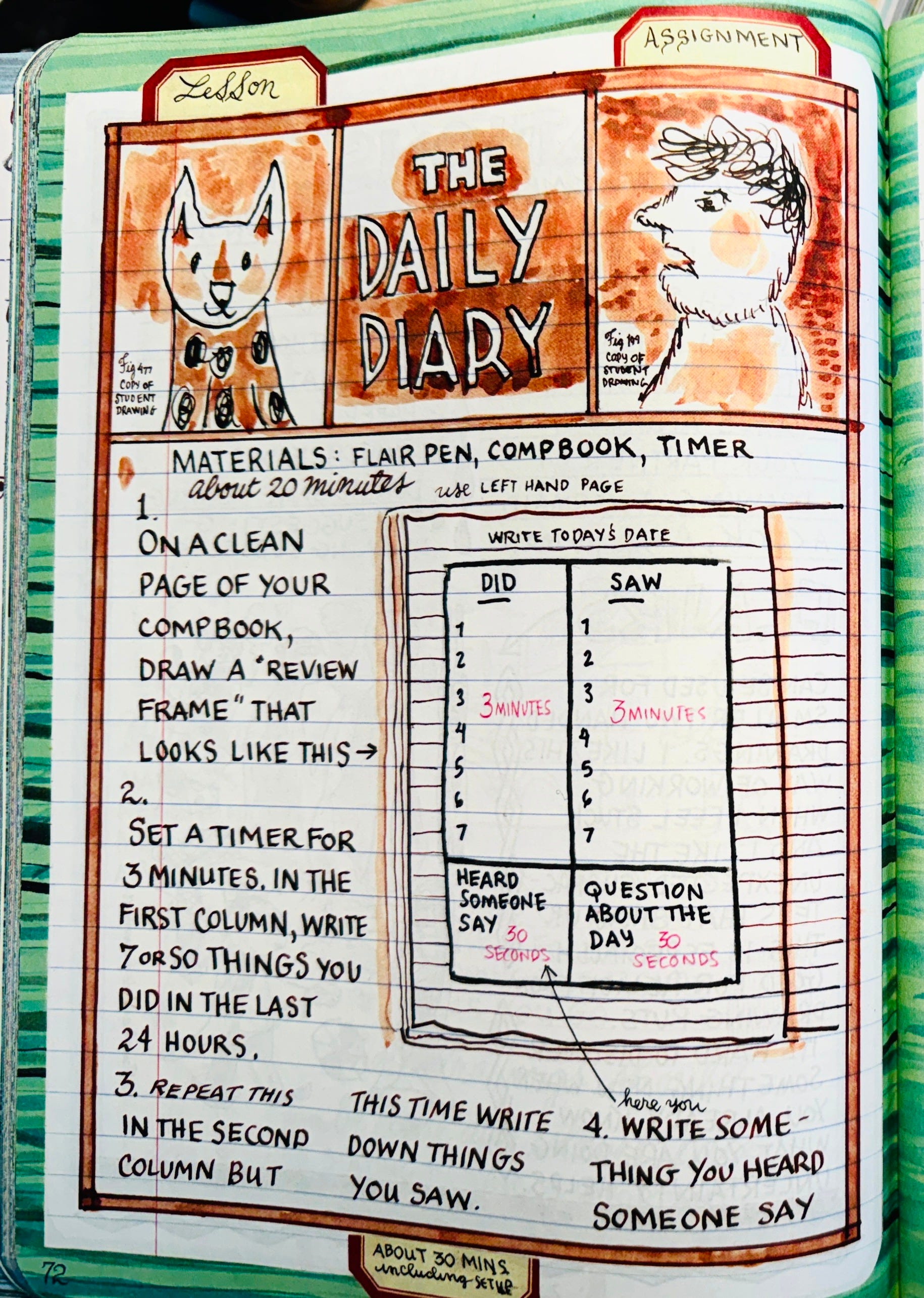
I don’t do her full assignment, but I do stay on the lookout for things I did, saw, heard, or thought in a day. Then I combine a drawing with words to capture a moment.
For example, what I did:

What I saw:
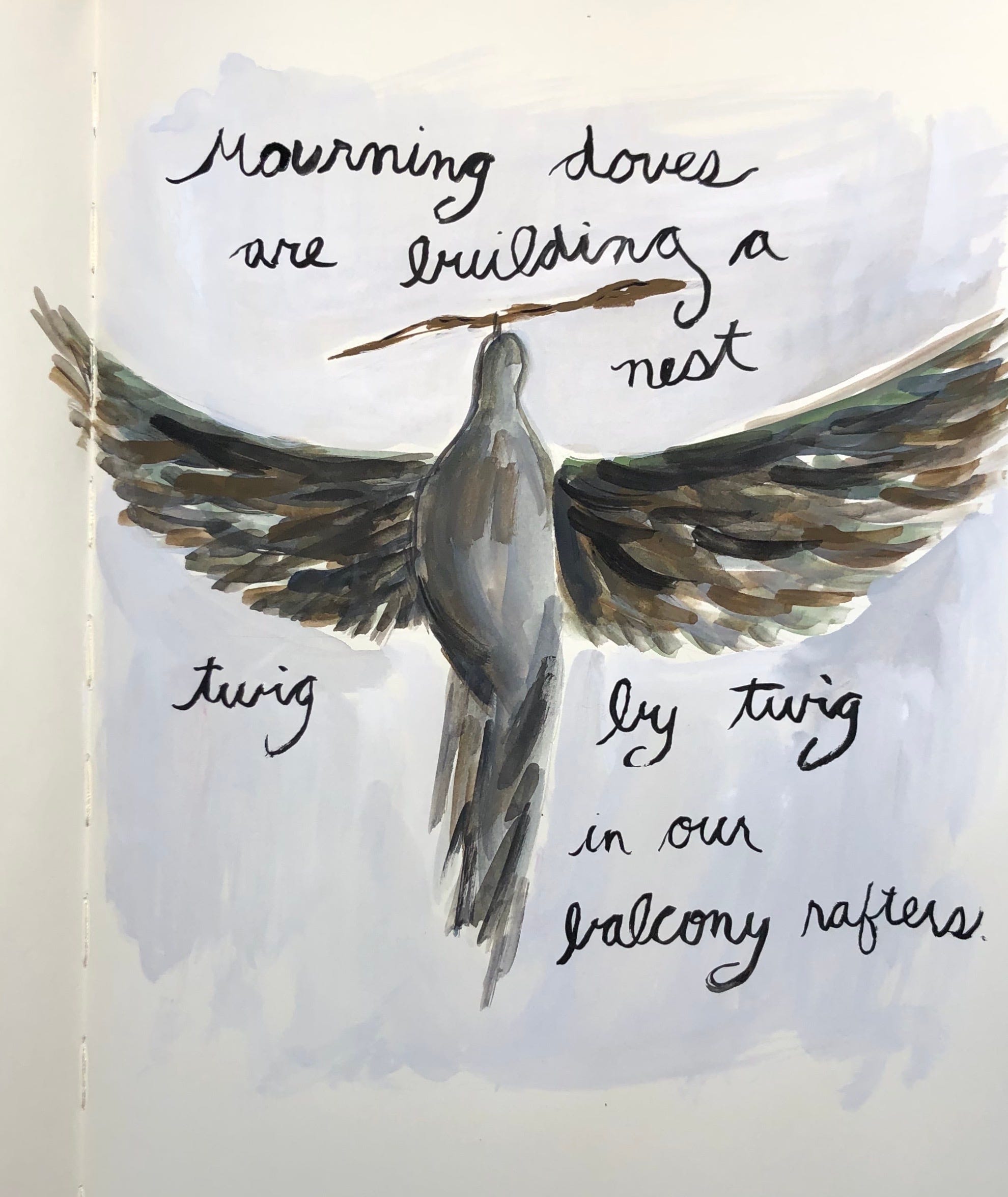
What I thought:
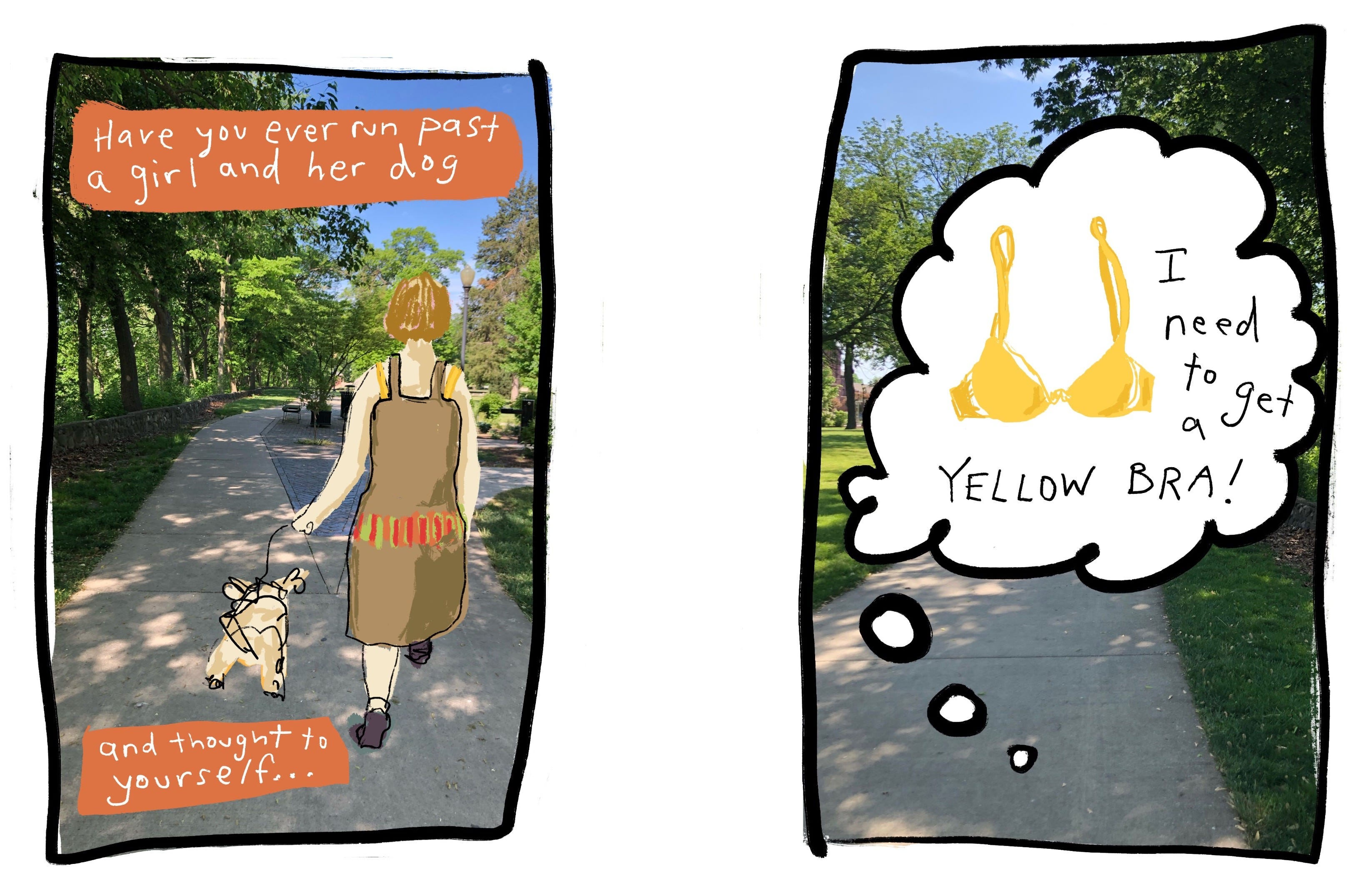
(Reader, I got the bra.)
What I heard:
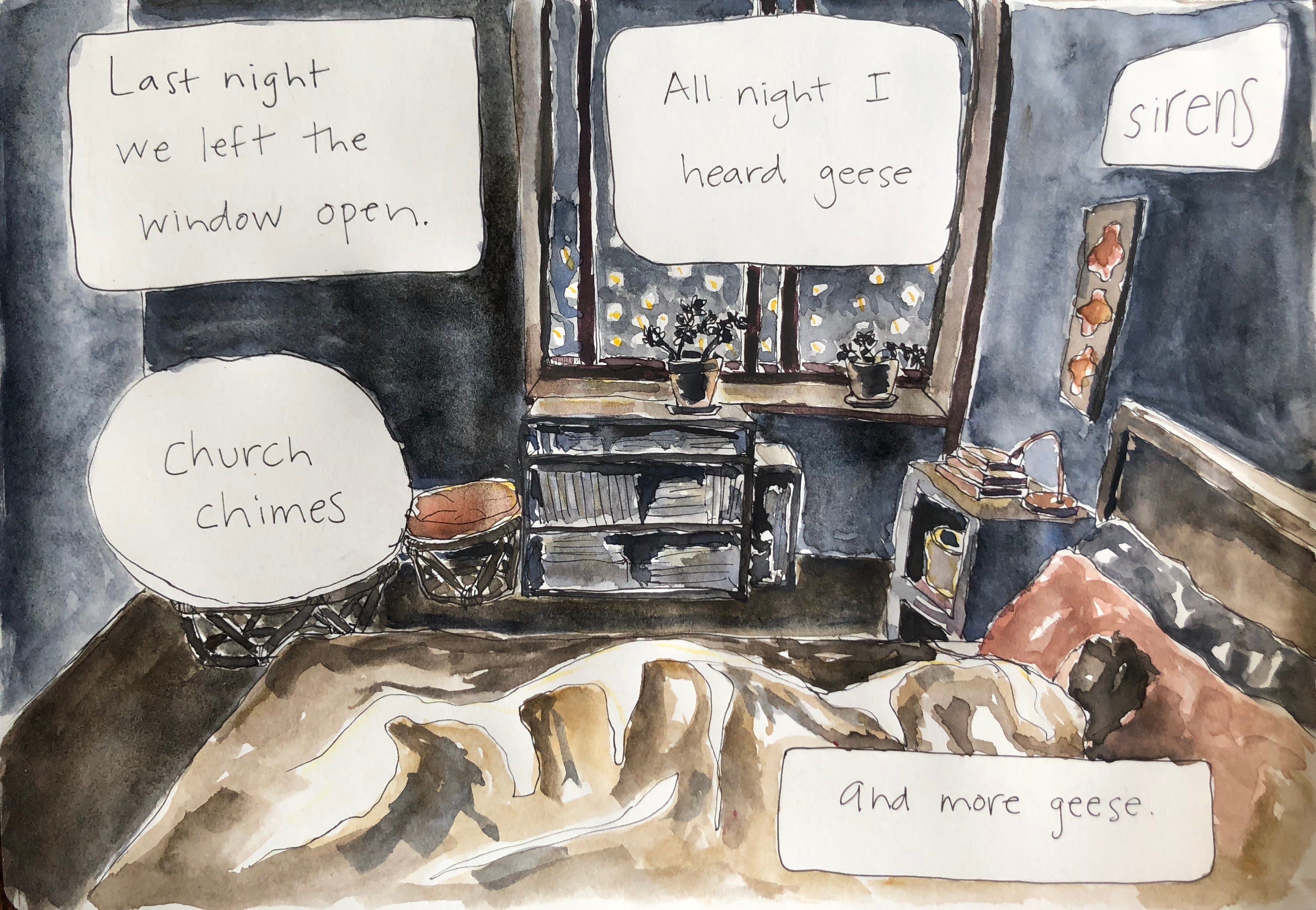
What I overheard:
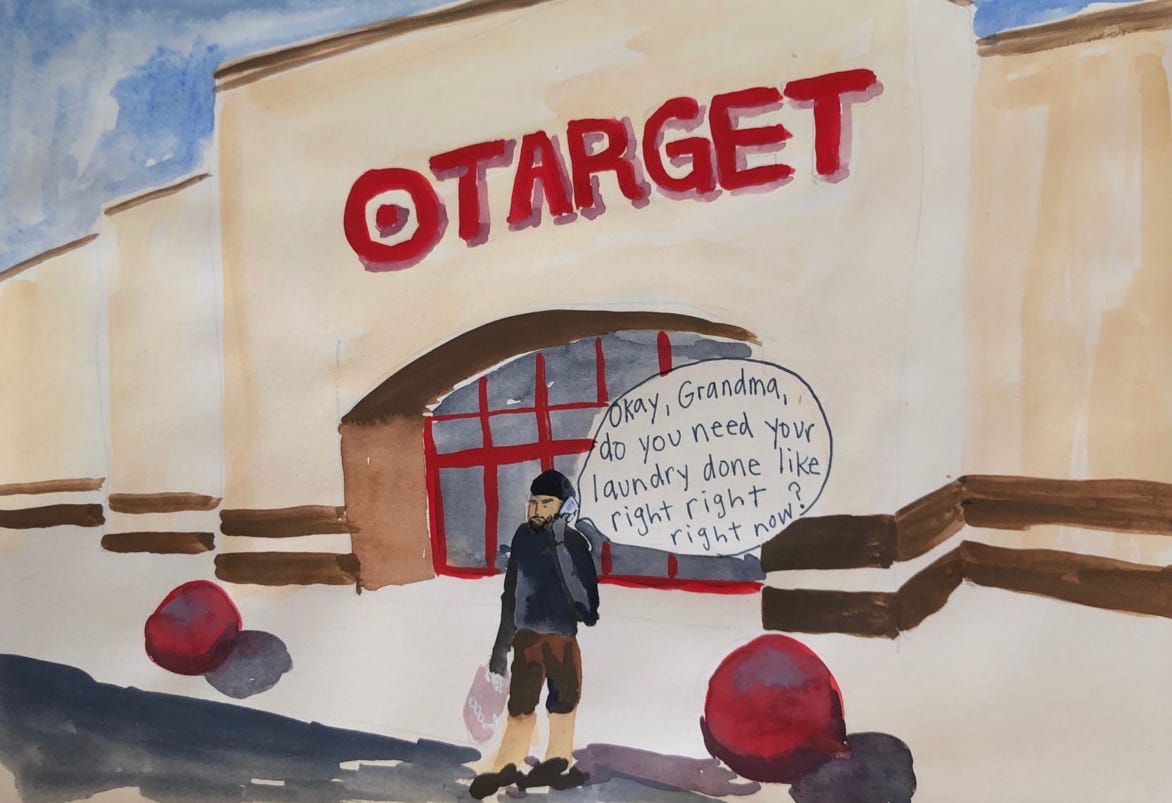
Even what I drank:

I’ll pause here to say that often the fun for me is juxtaposing the text with the image to suggest a larger story. The image tends to come first because it’s a scene from my day, such as the martini glass above. But adding the box with a checkmark and the word taxes suggests the bigger story that I have completed my taxes (off camera because it’s boring) and this is my chosen reward—which I’ll now enjoy on my deck near spring flowers.
Or the overheard line with the guy at Target above. I loved the unexpectedness of it all: that he was a young and tough-looking guy, that he was talking to his grandma, that he was talking about her laundry, that he was clearly in charge of her laundry, that he was trying to figure out how desperate she was (“right right right now?”)—and that it took place in a Target parking lot.
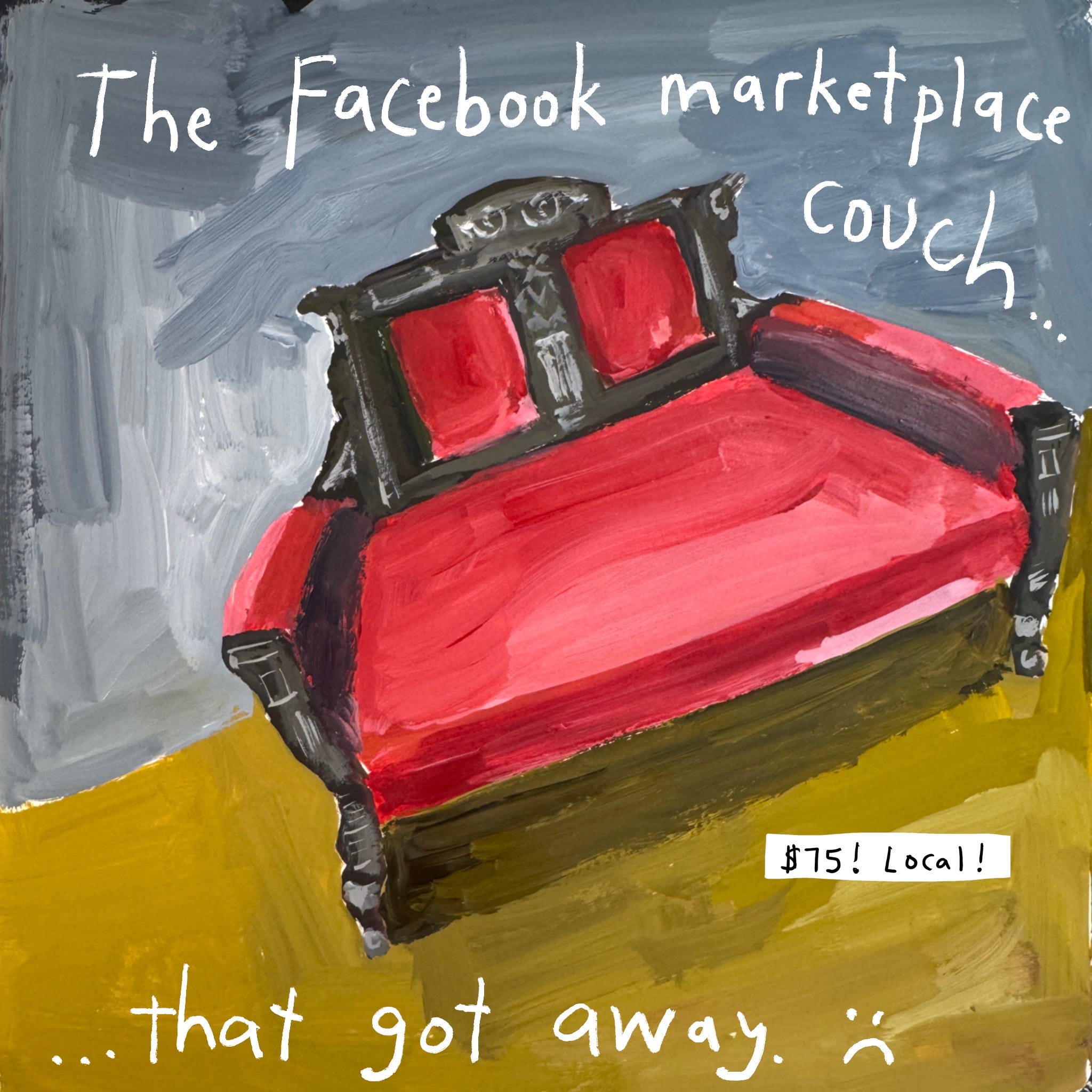
Other diary comics fall into less tangible categories, such as propositions:

Confessions:
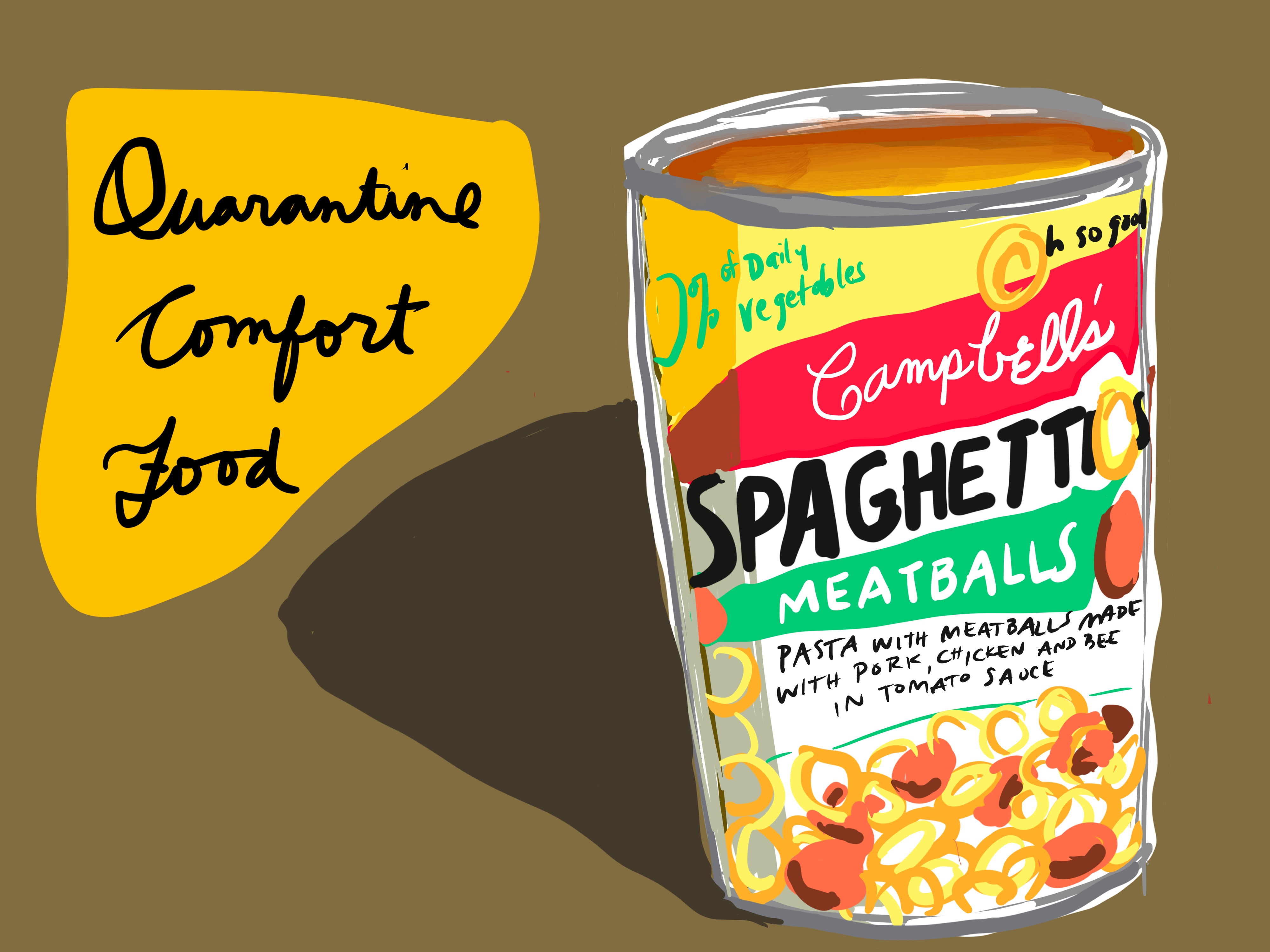
Obsessions:
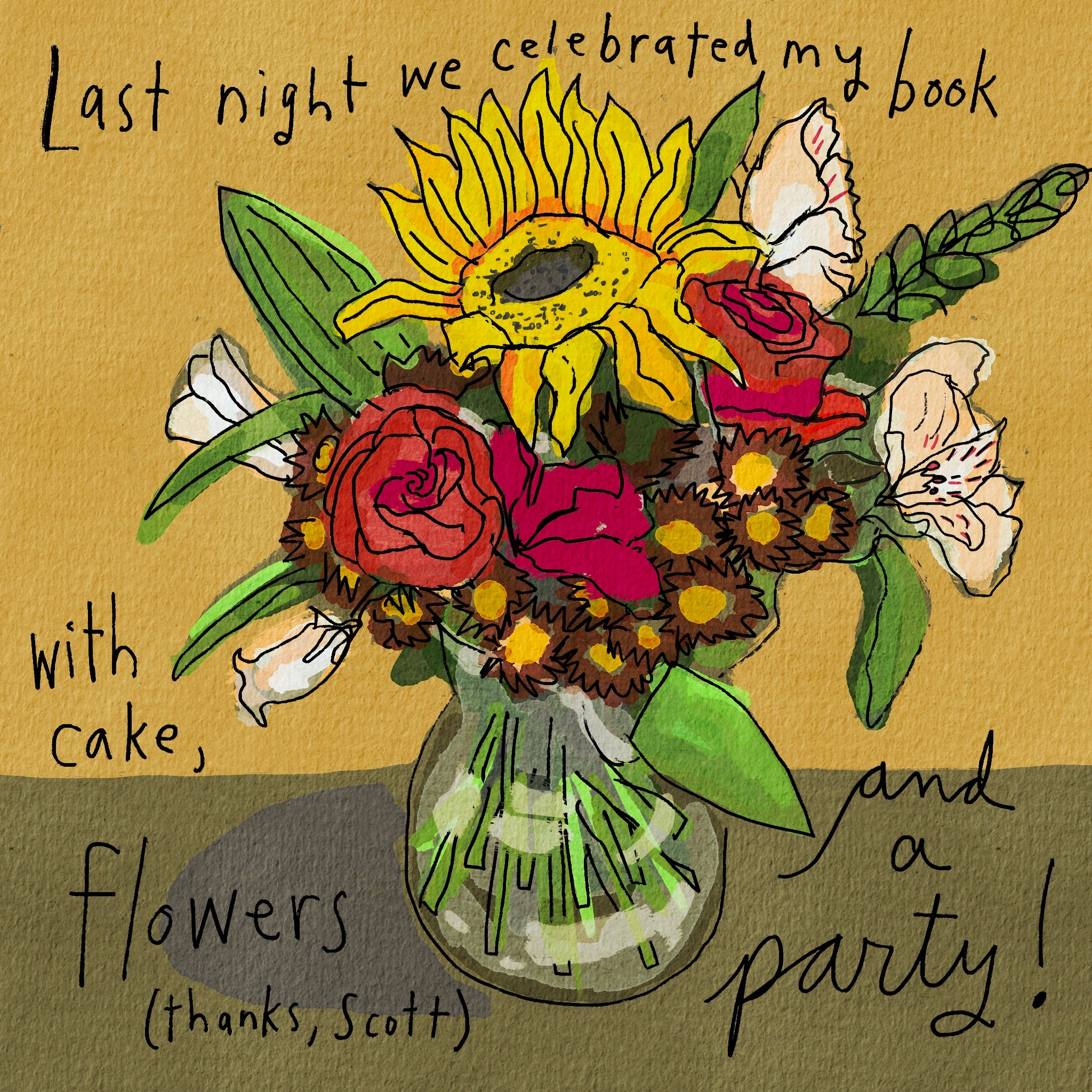
Celebrations:
And random observations:
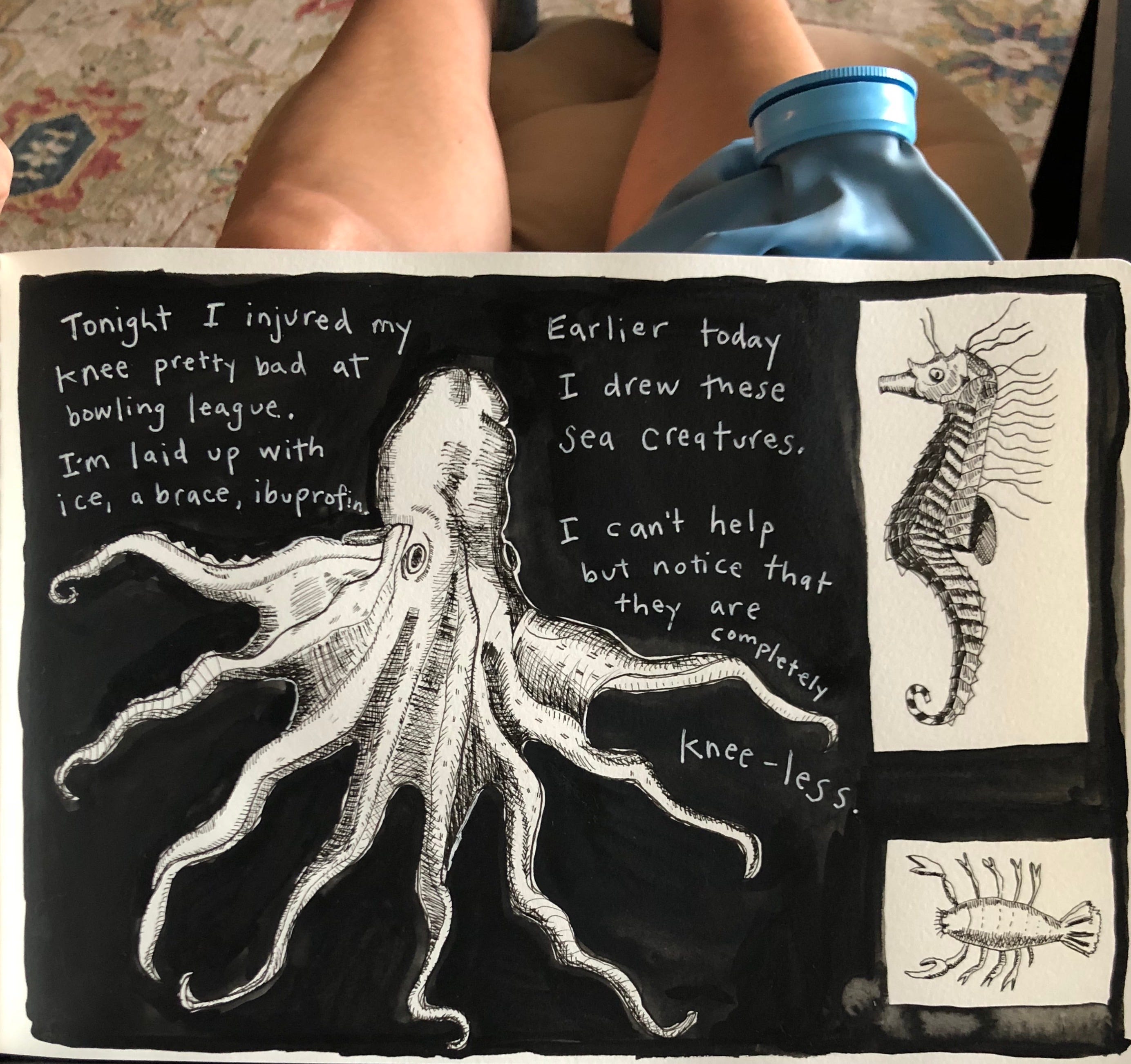
With most of the earlier examples, there were few words, so a viewer can take in the content pretty quickly. But in these latter examples, there are more words, thus telling more of a story and inviting readers to linger a bit longer.
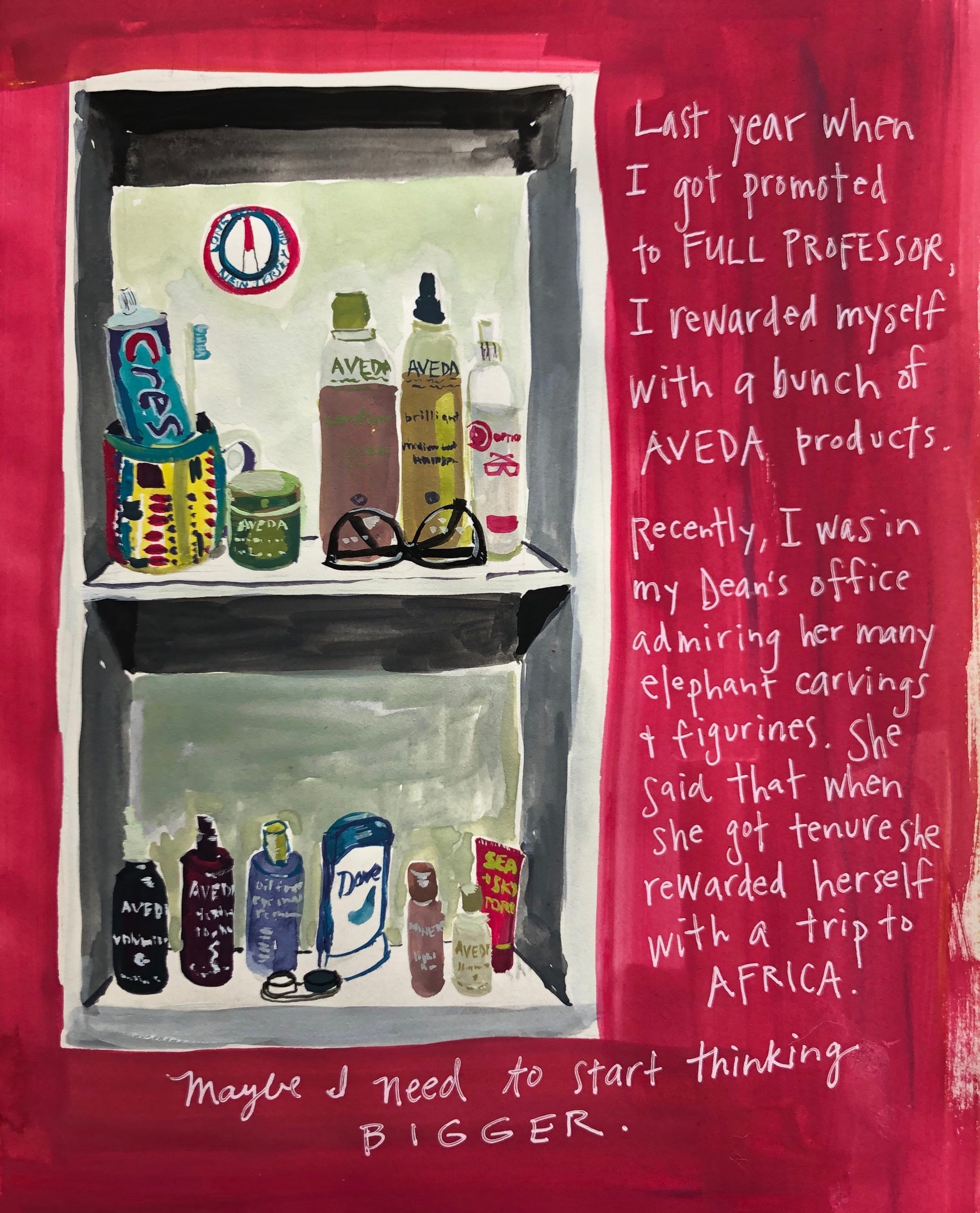
These too take different forms. Some are laments:
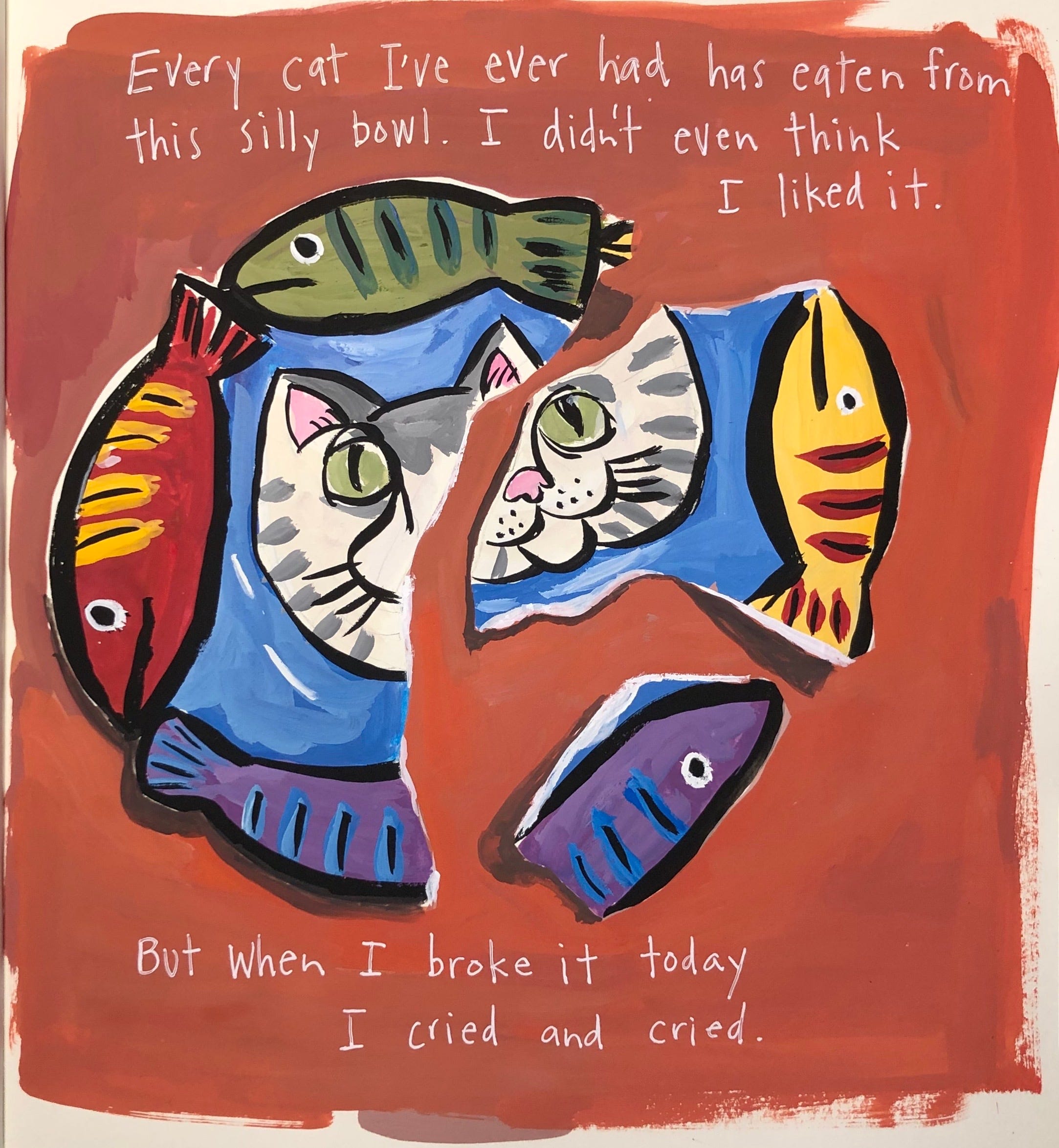
Others are philosophical musings:
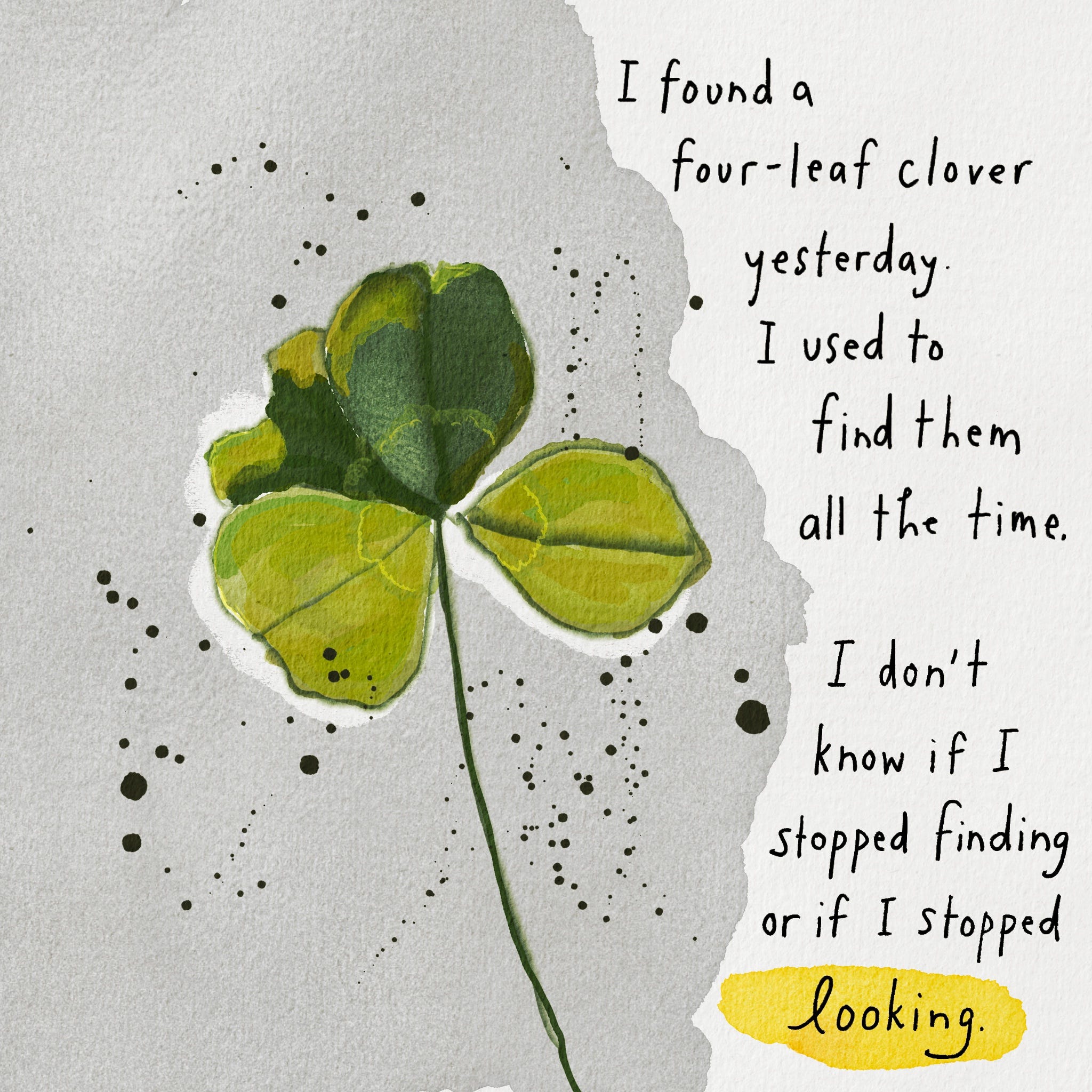
Existential conundrums:
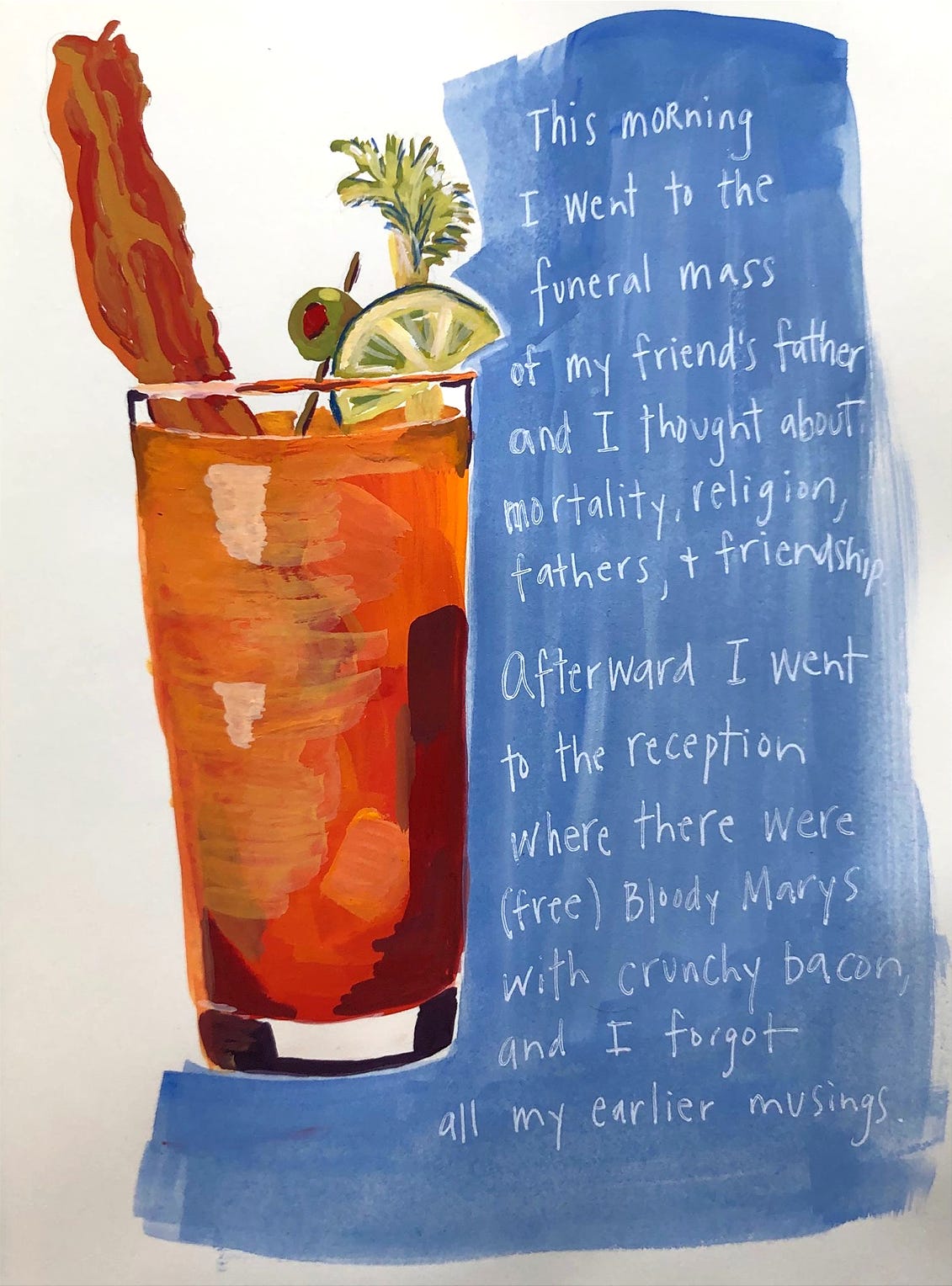
And even epiphanies:
And there are travel diary comics! Last summer when I went to Ireland, I drew postcards for 30+ paid subscribers (who signed up), and most of them ended up being diary comics of some sort—something I saw, did, heard, and thought (or learned) on my travels:
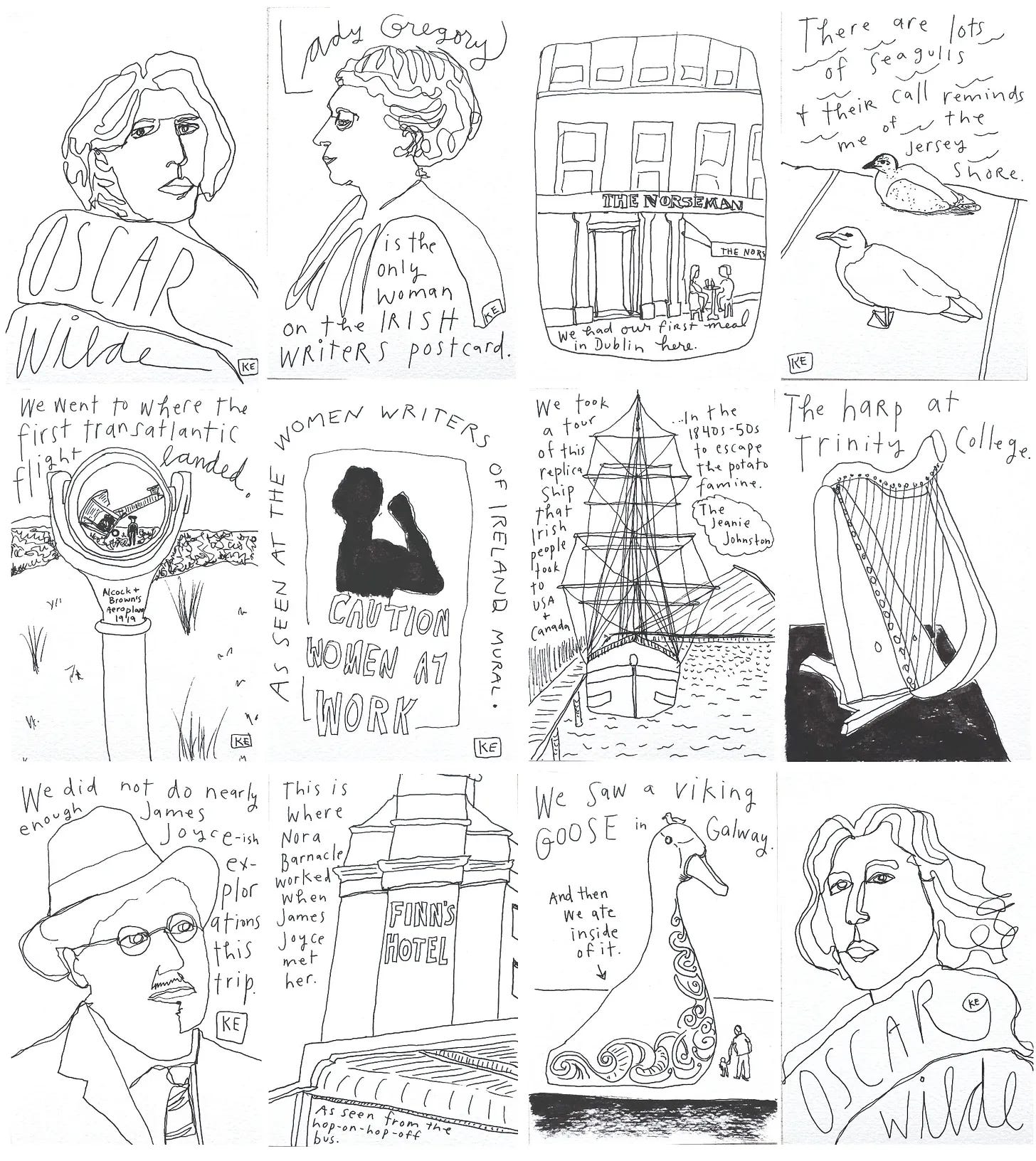
It was a little hectic making those postcards while traveling, but as with all diary comics, doing so heightened my attention and experience. I was always looking for photos to take and anecdotes to share. Then I went back through my photos for drawing reference, where I noticed new details or remembered things as I drew.
When I assign one-page diary comics to my students, I call them “Daily Life Comics” because a diary can imply that these are super personal or intimate moments when, in fact, I just want them to pay attention to the quotidian moments of their daily lives.
I also want to imply a distinction between making comics for one’s self and creating something intended to to be shared a reader. It can be wonderful to create diary comics for your eyes only, but in class, it’s public! And creating for an audience requires careful attention to what details are required to best communicate the story.
In addition to Barry’s four categories of content (what you saw did, saw, heard, thought/questioned), I suggest to my students these four categories of moments or experiences to be on the lookout for that can make for good daily life comics:
humorous (for example, one student drew a hilarious “Father Time” looming over his desk while he completely lost track of time and missed class)
weird (moments at school or work—for example one student made a comic of arriving at her barista job and all of her coworkers were singing show tunes)
relatable (for example one student drew a picture of a text message on a phone, “Hey there,” with the caption, “Nothing good can come from a 3am text from your ex”)
poetic (for example a student drew a close-up of an eye with the tiny reflection of two figures in the pupil, and added the caption, “I could watch them play all day.”)
There’s a lot of overlap here (i.e. weird and relatable moments tend to also be humorous), but the categories can help guide our attention.
I’m excited to make some more diary/daily life comics this summer and hope maybe you will too!
-Kelcey
Please check out K. Woodman-Maynard’s fab diary comics series at her Substack, Creating Comics! So far she’s written about what they are and why she loves them and how she makes them.
For more inspiration, Samantha Dion Baker draws her days, her world, and her adventures (I’m referencing her many book titles!) by pairing beautiful illustrations with captions in her journals.
And speaking of Lynda Barry! Did I sign up for a full-day workshop with her and John Porcellino in Madison, Wisconsin in two weeks? Hell yeah I did! Stay tuned for a full report!
Update—someone in the comments asked about the media I used in these pieces, and I’m always curious about that too. It’s a total medley. Diary comics are a great way to explore and test out different mediums and styles. They are, in order: colored pencil on acrylic background (Skyline), gouache (mourning dove), digital over photo (yellow bra), watercolor (nighttime sounds), gouache (Target), digital x3 (martini, ice cream, Spaghettios), acryla gouache (FB couch), digital (flowers), ink (sea creatures), gouache (cat bowl), digital (4-leaf clover), gouache (bloody mary), gouache (Aveda), ink (Ireland).
Thanks for reading The Habit of Art by Kelcey Ervick, a Substack Featured Publication (twice!). I love writing and drawing these posts and am grateful to everyone who follows along. I’m the author of four award-winning books, including the graphic memoir The Keeper, which Alison Bechdel called “a triumph!” (her exclamation point). I’m a professor of creative writing in Indiana, and I live on the banks of the St. Joseph River.
-Kelcey
Omg a full day workshop with Lynda Barry! Can’t wait to hear your recap.
I love these drawings! Maybe they're just for you, day by day, but I'd be happy to have them show up in my Substack feed! My problem with doing diary comics is I wait til the end of the day - so I have content! - but then they take so long to develop that I'm up wait too late. Diary Comics - a challenge to getting my sleep quotient in!